
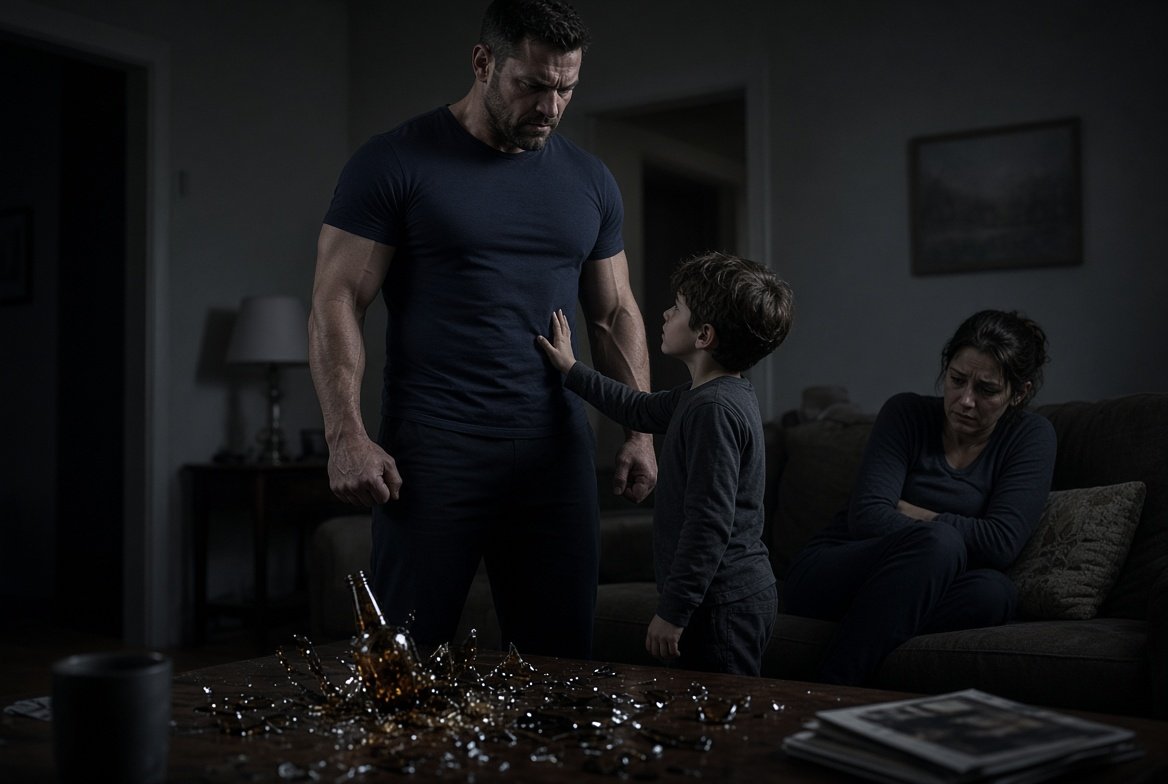
The phrase “toxic masculinity” has become increasingly common in contemporary discussions about men, relationships and society. It is often used to describe behaviours such as aggression, dominance, emotional restraint, competitiveness, risk-taking and the desire for authority.
Some of these behaviours can certainly become destructive. Violence, abuse, coercion and uncontrolled aggression are harmful regardless of whether they are associated with masculinity, femininity or anything else.
But that raises a more fundamental question:
Are masculine traits themselves toxic—or can otherwise valuable traits become toxic when they are expressed without character, discipline or moral restraint?
This distinction is important.
A man can be physically strong without being violent.
He can be assertive without being abusive.
He can be competitive without being malicious.
He can be emotionally controlled without being emotionally incapable of feeling.
He can exercise leadership without becoming tyrannical.
He can possess authority while understanding that authority carries responsibility.
My own work at Coach De Bruyns is explicitly concerned with “the pillars of masculinity, traditional values, and resilient family dynamics,” as well as gender roles, societal norms and the development of stronger, more purposeful lives. (Coach De Bruyns)
The central argument of this article is therefore simple:
We should distinguish between masculinity and the abuse of masculine qualities.
Masculinity Is Not the Same Thing as Aggression
One of the problems with the discussion surrounding toxic masculinity is that masculinity and pathological behaviour can sometimes be treated as though they are interchangeable.
They are not.
A man can possess considerable physical strength without ever using it to intimidate another person.
He can be competitive without wanting to destroy his competitors.
He can be dominant in the sense of taking responsibility and leadership without believing that other people are inferior.
He can be emotionally restrained without being emotionally incapable.
The American Psychological Association’s own guidance on boys and men provides an interesting qualification to simplistic accounts of masculinity. The APA notes that characteristics commonly associated with masculinity—including courage, strength, compassion, leadership and assertiveness—can be associated with positive psychological and behavioural health. At the same time, it argues that some masculine social norms can have negative consequences. (American Psychological Association)
That distinction deserves more attention.
Consider physical strength.
A strong man can use his strength to intimidate someone weaker. But he can also use it to protect his family, perform difficult work, compete in sport, defend another person or simply maintain his physical capabilities.
The strength itself is not the moral problem.
What matters is how the strength is governed.
The Case for Male Strength
Modern discussions about masculinity often focus heavily on the characteristics that supposedly need to be moderated or removed.
There is certainly value in teaching men emotional intelligence.
A man should understand his emotions.
He should be capable of communicating.
He should be able to admit when he is wrong.
He should be able to show affection toward his wife and children.
He should be capable of asking for help when he genuinely needs it.
None of these qualities requires the abandonment of masculinity.
Indeed, emotional maturity may require greater self-mastery, not less.
A man who cannot control his anger is not necessarily demonstrating strength. He may simply be controlled by his anger.
A man who responds to every insult with violence is not necessarily demonstrating courage. He may be demonstrating insecurity.
A man who cannot tolerate disagreement is not necessarily demonstrating authority. He may simply lack self-control.
The distinction is therefore between controlling emotion and denying emotion.
That distinction is critical.
Self-Control Is Strength
The word “stoicism” is frequently used negatively when discussing traditional masculinity.
There is, however, an enormous difference between emotional suppression and emotional discipline.
Suppression says:
“I am not allowed to feel this.”
Discipline says:
“I feel this, but I will decide how I respond.”
These are not the same thing.
A father whose child is frightened may need to remain calm even though he is frightened himself.
A husband may need to remain composed when his family is facing a crisis.
A soldier, firefighter, police officer, emergency worker or surgeon may need to perform effectively despite intense fear or stress.
The ability to remain functional under pressure is not inherently pathological.
It can be a virtue.
The APA itself does not argue that masculinity should simply be discarded. Its guidelines explicitly state that their aim is to help men and boys embrace masculinity in flexible ways that can protect their health and improve their lives. (American Psychological Association)
That is a considerably more nuanced position than the popular caricature of “toxic masculinity.”
Leadership Is Not Abuse
Leadership is another characteristic frequently associated with traditional masculinity.
My own work places considerable emphasis on traditional values, relationships, family structures and masculine responsibility. My website describes my broader work as addressing gender roles, societal norms, religion and family dynamics. (Coach De Bruyns)
But leadership must not be confused with tyranny.
A leader who demands obedience while refusing responsibility is not demonstrating admirable leadership.
A husband who demands authority over his household while refusing to protect, provide, sacrifice or accept accountability has confused authority with entitlement.
Authority without responsibility becomes entitlement.
Leadership without accountability becomes domination.
Strength without self-control becomes brutality.
This is where a mature conception of masculinity becomes important.
The question is not simply whether a man has power. The question is whether he has the character to govern that power.
Men Need Standards
Men need standards.
That does not mean that every traditional masculine expectation is automatically healthy. It means that personal development necessarily involves standards, discipline and self-restraint.
A man who wants to become stronger, more disciplined and more capable will inevitably have to say no.
No to laziness.
No to excessive indulgence.
No to destructive relationships.
No to addictions.
No to irresponsible sexual behaviour.
No to sacrificing long-term objectives for immediate gratification.
No to allowing other people to determine his character.
My own coaching philosophy centres on personal development and becoming a better version of oneself. That philosophy is consistent with the broader purpose stated on my website: helping men develop strength, purpose and fulfilment. (Coach De Bruyns)
Discipline is therefore not an outdated masculine defect.
It is one of the mechanisms through which character is developed.
What About Emotional Suppression?
There is a legitimate criticism to be made of some traditional approaches to raising boys.
“Never cry.”
“Never show weakness.”
“Man up.”
“Don’t talk about your problems.”
Taken literally and universally, these messages can discourage men from expressing vulnerability or seeking assistance.
The APA’s guidelines identify restrictive emotionality—difficulty expressing or experiencing vulnerable emotions—as one component of masculine gender-role conflict that can create problems for some men. (American Psychological Association)
That evidence deserves to be taken seriously.
But recognising a problem with emotional suppression does not require rejecting emotional control.
A mature man should ideally be capable of both:
feeling deeply and acting deliberately.
He should be able to acknowledge fear without allowing fear to dictate every decision.
He should be able to experience anger without becoming violent.
He should be capable of sadness without allowing sadness to become an excuse for abandoning responsibility.
He should be capable of vulnerability without making vulnerability his entire identity.
This is not emotional repression.
It is emotional maturity.
Masculinity and Responsibility
Perhaps the most useful question is not:
“Is this trait masculine?”
The better question is:
“What does this trait produce?”
Does strength make a man more capable of protecting others?
Does ambition make him more productive?
Does competitiveness motivate him to improve?
Does assertiveness allow him to establish healthy boundaries?
Does confidence enable him to accept responsibility?
Does discipline help him resist destructive impulses?
Does leadership make his family more secure?
If so, it becomes difficult to argue that the underlying trait is inherently toxic.
But virtually every strength has a corresponding vice.
Confidence can become arrogance.
Leadership can become tyranny.
Protectiveness can become possessiveness.
Sexual desire can become promiscuity.
Competitiveness can become cruelty.
Ambition can become greed.
Strength can become violence.
The solution is not necessarily to eliminate the underlying capacity.
It is to cultivate the virtue while restraining the vice.
A Man Should Be Capable—And Disciplined
There is value in a man possessing the capacity to defend himself and others.
There is also value in his understanding that physical power imposes responsibility.
This is one reason combat sports can play an important role in male development.
My own background includes training in boxing, Muay Thai, karate and judo, which my website describes as part of my lifelong interest in combat sports and physical development. (Coach De Bruyns)
The lesson of martial arts is not simply how to fight.
One of the deeper lessons is learning when not to fight.
A man who has no capacity for violence may avoid violence because he has no alternative.
A disciplined man may possess considerable physical capability while choosing restraint because he understands the consequences of using it.
That distinction illustrates a broader principle:
Power becomes valuable when it is governed by character.
Masculinity and Family
The question of masculinity becomes particularly significant when discussing marriage and family.
Families require sacrifice.
They require commitment.
They require responsibility.
They require people who can think beyond immediate gratification.
My work has consistently examined marriage, relationships, family structures and traditional values from this perspective. My website describes my writing as addressing “gender roles, societal norms, religion, and Quranic governance” while seeking to help men build stronger and more purposeful lives. (Coach De Bruyns)
Traditional masculinity, at its best, therefore demands more from men—not less.
It asks:
Can you be trusted?
Can you take responsibility?
Can you protect those who depend upon you?
Can you provide?
Can you exercise self-control?
Can you keep your word?
Can you accept the consequences of your decisions?
These are demanding questions.
But demanding is not synonymous with toxic.
The Problem With Calling Everything “Toxic”
Words matter.
If “toxic masculinity” refers to violence, abuse, coercion, pathological dominance and destructive behaviour, then identifying those behaviours as harmful is reasonable.
But if the term is expanded to encompass confidence, physical strength, leadership, competitiveness, assertiveness, protectiveness or the expectation that men should assume responsibility, the concept becomes considerably less precise.
This is where the debate can become counterproductive.
The APA itself acknowledges that strength, leadership and assertiveness can be positive characteristics while simultaneously warning about particular masculine norms that can become harmful. (American Psychological Association)
That is an important distinction.
It suggests that the real question should not be:
“Is masculinity toxic?”
It should be:
“Which masculine behaviours are beneficial, which are harmful, and under what circumstances?”
That is a much more productive question.
Masculinity Needs Moral Direction
The strongest argument against destructive masculinity is not necessarily an argument against masculinity.
It is an argument for better masculinity.
Men need principles.
They need discipline.
They need purpose.
They need responsibility.
They need relationships.
They need families worth protecting.
They need standards worth pursuing.
And they need the ability to distinguish between:
- courage and recklessness;
- confidence and arrogance;
- leadership and domination;
- desire and lust;
- strength and cruelty;
- emotional control and emotional suppression;
- responsibility and authoritarianism.
These distinctions are essential because masculinity is not a guarantee of virtue.
Neither is femininity.
Being male does not automatically make a man good.
But neither does being masculine automatically make him toxic.
Character determines how a person uses his attributes.
What Does the Research Actually Say?
The research does provide grounds for concern about certain rigid masculine norms.
The APA’s 2018 Guidelines for Psychological Practice with Boys and Men discuss traditional masculinity ideology in terms including anti-femininity, achievement, avoidance of appearing weak, and adventure/risk/violence. The guidelines argue that rigid or restrictive gender roles can contribute to gender-role conflict and psychological difficulties. (American Psychological Association)
The APA’s subsequent educational material similarly argues that some masculine norms—particularly those associated with dominance, aggression, emotional restriction and reluctance to seek help—can contribute to harmful outcomes. (American Psychological Association)
However, the same APA materials explicitly recognise positive masculine characteristics.
The APA has stated that characteristics stereotypically associated with masculinity—including strength, leadership and assertiveness—can be positive for men and boys, while arguing that some social expectations surrounding masculinity can undermine wellbeing. (American Psychological Association)
Consequently, the evidence does not require the simplistic conclusion that “masculinity is toxic.”
A more defensible interpretation is that certain rigid expressions of masculine norms can be harmful, while many characteristics associated with masculinity can also be beneficial.
That is a much more nuanced proposition.
Masculinity Should Be Developed, Not Destroyed
The debate over toxic masculinity has identified genuine problems.
Violence is a problem.
Abuse is a problem.
Coercion is a problem.
Irresponsibility is a problem.
Emotional dysfunction is a problem.
But none of these problems proves that masculinity itself is defective.
A hammer can build a house.
It can also destroy one.
The fact that a tool can be misused does not mean that the tool has no legitimate purpose.
Masculine traits are similar.
Strength can protect or intimidate.
Authority can serve or oppress.
Ambition can create or exploit.
Sexual desire can contribute to intimacy or become promiscuity.
Aggression can become uncontrolled violence or, when disciplined, contribute to courage and competitive achievement.
The objective should therefore not be to eliminate masculine traits.
It should be to develop the character required to use them responsibly.
Conclusion: Are Masculine Traits Really Toxic?
The answer depends upon what we mean by “masculine traits.”
If we mean violence, abuse, coercion and uncontrolled aggression, then those behaviours are clearly destructive.
But if we mean strength, courage, leadership, assertiveness, competitiveness, protectiveness, discipline and emotional resilience, the evidence does not support simply declaring these qualities toxic.
Indeed, even the American Psychological Association acknowledges that several of these traditionally masculine characteristics can be positive. (American Psychological Association)
The real challenge is therefore not to make men less masculine.
It is to help men become better men.
A man should not be ashamed of his strength.
He should be responsible for it.
He should not be ashamed of authority.
He should understand that authority creates obligations.
He should not be ashamed of ambition.
He should ensure that his ambition produces something worthwhile.
He should not be ashamed of masculine confidence.
He should ensure that confidence does not become arrogance.
And he should not be afraid of masculinity.
He should learn to master it.
Because the goal should never be to create men who are incapable of doing harm.
The goal should be to cultivate men who possess strength without cruelty, confidence without arrogance, authority without tyranny, courage without recklessness, and power governed by responsibility.
That is not toxic masculinity.
That is responsible masculinity.
References
American Psychological Association. (2018). APA Guidelines for Psychological Practice with Boys and Men. Washington, DC: American Psychological Association. The guidelines discuss the social and cultural construction of masculinities and the potential effects of rigid gender-role expectations. (American Psychological Association)
American Psychological Association. (2019). A Closer Look at the APA Guidelines for Psychological Practice with Boys and Men. The APA explains that characteristics commonly associated with masculinity—including courage, strength, compassion, leadership and assertiveness—can be associated with positive psychological and behavioural health. (American Psychological Association)
American Psychological Association. (2019). APA Guidelines on Boys and Men launch important — and fiery — national conversation. Monitor on Psychology. This article explains the purpose of the guidelines and notes that strength, leadership and assertiveness can be positive while some masculine social norms can undermine men’s health. (American Psychological Association)
American Psychological Association. (2023). How to prevent harmful masculinity and violence. This resource discusses the relationship between certain masculine norms, socialization and violence, while focusing on prevention and healthier expressions of masculinity. (American Psychological Association)
Coach De Bruyns. Coach De Bruyns — Become the best version of yourself. The author’s website describes his work as focusing on masculinity, traditional values, resilient family dynamics, gender roles, societal norms, religion and purposeful living, as well as his background in combat sports. (Coach De Bruyns)
United Nations Women. Men and Masculinities. UN Women defines masculinities as the social roles, expectations, practices and norms associated with being a boy or man within particular social, cultural and historical contexts. (UN Women)
Further reading
- Coach De Bruyns — official website
- APA Guidelines for Psychological Practice with Boys and Men
- APA: A Closer Look at the Guidelines
- APA: How to prevent harmful masculinity and violence



Basic Plan One-on-one session
In this session, we will get to know each other and discover how best to help you become the best version of yourself. Once you’ve booked, you will receive a confirmation email where you can select an appropriate time and date.


Your line “Leadership without accountability becomes domination.” raises a practical question about the household example. If a wife disagrees with her husband’s decision, what process lets her challenge it and seek a change without her disagreement being treated as disobedience?
Disagreement isn’t disobedience. A wife should voice her disagreement. However, she should recognize that despite her disagreement she will respect her husband’s authority and that ultimately she will go along with his decision if it doesn’t violate her rights. If what he wants violates her rights then she shouldn’t obey him. However, those rights are agreed upon right at the beginning of the relationship.